


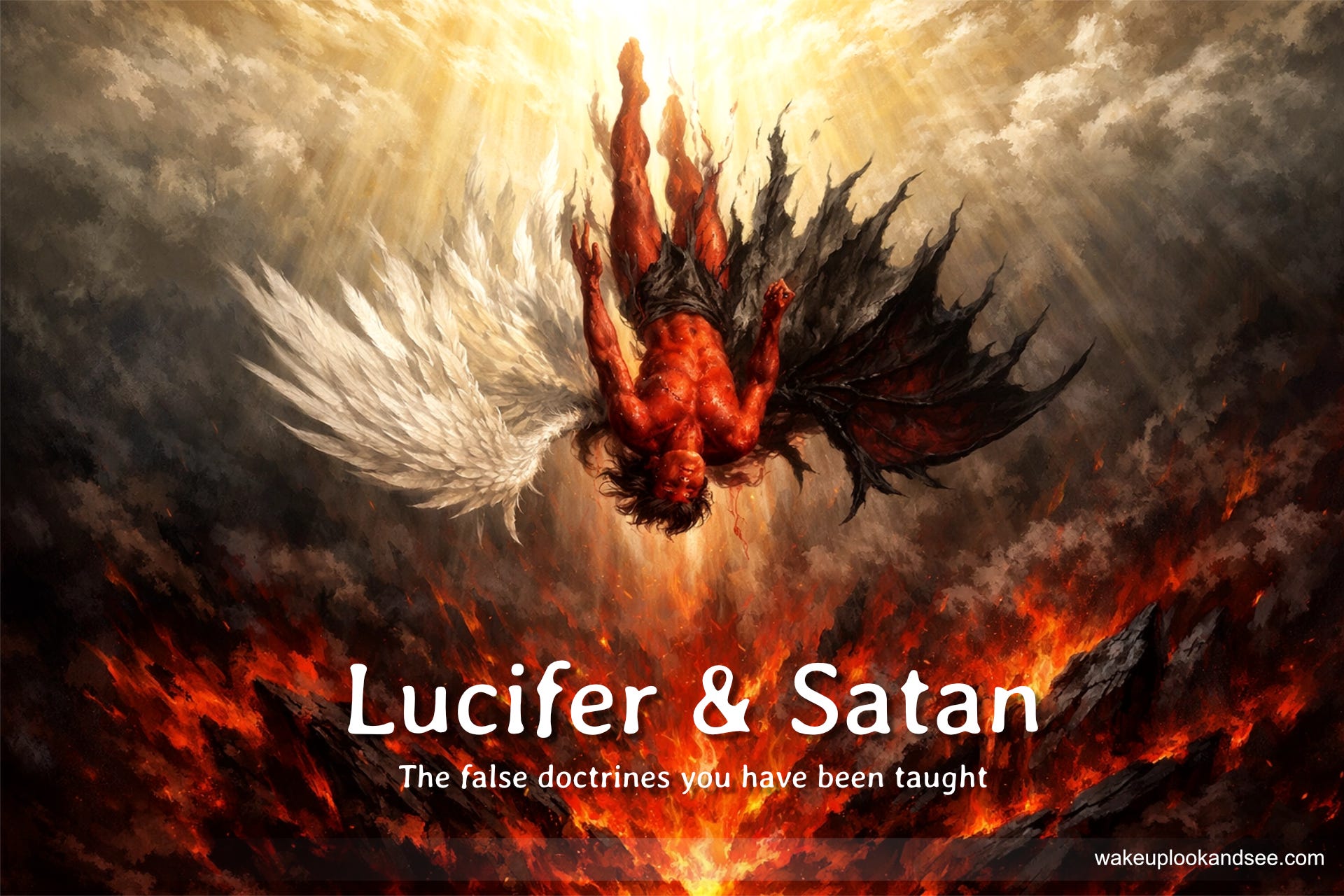
This post lays the foundation of the story of Lucifer becoming Satan and will subsequently use evidence and dissect each aspect to highlight the devious deception of Christianity.
The narrative of Lucifer, particularly his origins, rebellion, and subsequent fall, is primarily derived from theological interpretations of specific Old Testament passages, notably Isaiah 14 and Ezekiel 28, as well as corroborating New Testament references, including Revelation 12. While the name “Lucifer” itself is rooted in Latin, meaning “light-bearer” or “morning star,” its application to the fallen angel stems from the King James Version’s translation of the Hebrew term Helel ben Shahar in Isaiah 14:12.
Before his rebellion, Lucifer is depicted as an extraordinary being of beauty, wisdom, and perfection, holding a high-ranking position as an “anointed guardian cherub” within God’s divine order. He is described as having resided in the “garden of God” and on the “holy mountain of God,” adorned with precious stones, signifying his exalted status and proximity to the divine.
The catalyst for Lucifer’s downfall was his own self-generated pride. He became enamoured with his inherent beauty, intelligence, and power, leading him to covet the honour and glory that rightfully belonged to God. This hubris manifested in a series of five ambitious declarations, often referred to as the “five I wills,” found in Isaiah 14:13-14:
“I will ascend to heaven.”
“I will raise my throne above the stars of God.”
“I will sit on the mount of assembly.”
“I will ascend above the heights of the clouds.”
“I will make myself like the Most High.”
These declarations signify a direct challenge to God’s sovereignty and an attempt to usurp divine authority. As a consequence of this profound act of rebellion, Lucifer was banished from his celestial abode, cast down from the “mountain of God” and thrown to the earth. Following his expulsion, his identity transformed from the “light-bearer” to Satan, a Hebrew term meaning “adversary” or “accuser”.
Biblical scholars often interpret Isaiah 14:12-17 and Ezekiel 28:11-19 as dual prophecies. While these passages ostensibly address the human kings of Babylon and Tyre, respectively, the descriptive language employed—such as references to a “guardian cherub” and a presence “in Eden”—is understood to transcend human characteristics, thereby pointing to the spiritual entity, Satan, operating behind these earthly rulers. Further New Testament support for this primordial fall is found in Luke 10:18, where Jesus states, “I saw Satan fall like lightning from heaven,” and in Revelation 12:7-9, which recounts a war in heaven leading to the expulsion of the dragon (Satan) and his angels.
Despite his fall from grace and loss of his original authority, Satan is depicted as retaining access to the earthly realm and, at times, even to heaven in the capacity of an accuser, as illustrated in the Book of Job. However, biblical prophecy outlines his ultimate destiny: following the second coming of Christ, he is foretold to be bound in a pit during the millennial kingdom and eventually cast into the “lake of fire” for eternal judgment.
Summary
Lucifer, originally a high-ranking, beautiful angel known as the “morning star” or “lightbearer,” fell from Heaven due to pride and envy, desiring to be equal to God. He rebelled, leading a third of the angels in a heavenly revolt before being cast out by Michael, becoming Satan, the adversary.
Key Aspects of the Story:
Original Position: Lucifer was an anointed, perfect “covering cherub”. He was likely the highest angel, adorned with jewels, and led the heavenly choir in worship.
The Fall (Pride): Lucifer allowed his beauty and wisdom to corrupt him. He decided he should be worshipped rather than worshipping God, desiring to make himself “like the Most High”.
The Rebellion: Lucifer convinced a third of the angels to join his revolt, leading to a war in heaven. He is described as a “traitor” who brought darkness into heaven.
The Expulsion: God banished Lucifer from Heaven, with Jesus describing his fall as seeing Satan fall “like a flash of lightning”.
Aftermath: He became known as Satan (”adversary” or “accuser”). His destiny is to be thrown into the lake of fire.
Biblical References: The fall is largely interpreted from passages like Isaiah 14:12 (“How you have fallen from heaven, oh star of the morning”) and Ezekiel 28, often associated with his pride, alongside Revelation 12, which describes the war in heaven.
Note: The name “Lucifer” (Latin for “light-bearer”) appears only once in many Bible translations (Isaiah 14:12, KJV), and the story is synthesised from various biblical passages, traditions, and interpretations.
References
[2] Harvest.org. (n.d. ). The Origin and Fall of the Devil. Retrieved from
[3] Franciscan Media. (2026, January 20 ). Finding Satan’s Story in the Bible. Retrieved from